Whimsical Automation: The Robo-Buddies Watercolor Nursery Aesthetic
In the current landscape of digital design and branding, we are seeing a significant pivot toward authenticity and warmth. While sleek, minimalist vectors have dominated the last decade, there is a rising demand for textures that feel human and hand-crafted. Enter the "Robo-Buddies" collection—a charming set of watercolor robot illustrations that perfectly bridges the gap between modern technology and nostalgic artistry. For designers, entrepreneurs, and content creators, this isn't just a set of cute drawings; it is a versatile design asset that solves a specific visual problem: how to make technology feel approachable.
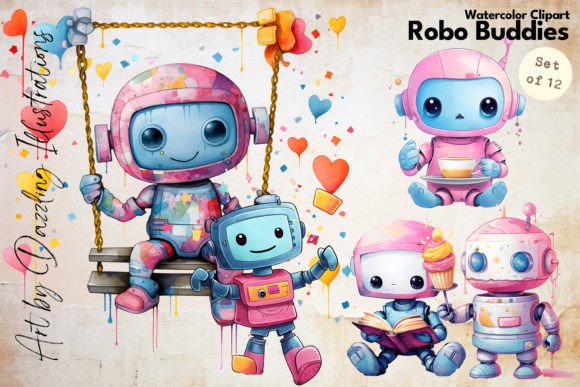
The core appeal of Robo-Buddies | Watercolor Robots Nursery lies in its contradiction. Robots are typically associated with cold metal, sharp edges, and rigid geometry. However, this collection reimagines the machine through a soft, painterly lens. The watercolor medium introduces bleed, texture, and transparency—elements that are inherently organic. When you look at these illustrations, you see friendly faces, soft pastel gradients, and imperfections that make them feel alive. They aren't just machines; they have personalities. You have the baker, the dancer, the reader, and the gardener. This narrative depth allows creators to build a story around the visuals, rather than just decorating a space.
Visual Characteristics and Emotional Resonance
From a modern typography and illustration standpoint, the Robo-Buddies set excels in emotional engagement. The visual style avoids the "uncanny valley" often associated with robotics by anthropomorphizing the characters with distinct hobbies. A robot holding a watering can or sipping coffee creates an immediate emotional connection with the viewer. It suggests nurturing and relaxation—two powerful psychological triggers in marketing and interior design.
The color palette typically associated with this style leans towards soft pastels, which is a staple in nursery design but has also crossed over into lifestyle branding and wellness apps. The watercolor texture provides a high-end, artisanal feel. Unlike flat vector graphics, which can sometimes feel generic or "clip-artish," these illustrations carry the weight of traditional art. This makes them ideal for projects where perceived value is crucial. For a small business owner selling baked goods, using the "baking robot" illustration on their packaging design instantly communicates a blend of efficiency and homemade care.
Strategic Applications for Designers and Brands
Understanding where to deploy the Robo-Buddies aesthetic is key to maximizing their impact. Because these illustrations are rich in detail and texture, they serve best as focal points rather than background noise. Here is how different professionals can leverage this set:
- Editorial and Web Design: For bloggers and publishers, these robots make excellent spot illustrations. Breaking up long blocks of text with a whimsical robot improves readability and keeps the user scrolling. In web design, they can serve as custom 404-page mascots or loading animations, adding personality to the user interface.
- Brand Identity and Logo Design: While a complex watercolor illustration might be too detailed for a standalone logo design, it works beautifully as a brand mascot or secondary mark. A coffee shop could use the "coffee-sipping robot" on their menu headers or loyalty cards to build a consistent brand identity.
- Social Media Graphics: In the fast-paced world of social media, stopping the scroll is essential. The unique visual style of watercolor robots stands out against the sea of polished, corporate graphics. They are perfect for social media graphics promoting creative workshops, children’s parties, or tech startups with a human-centric approach.
- Publishing and Merchandise: For self-publishers, particularly in the children’s book sector, this collection is a goldmine. The characters are ready-made for storybooks. Furthermore, the designs translate well to physical merchandise like tote bags, stickers, and t-shirts, offering a tangible product line for entrepreneurs.
Pairing and Typography Considerations
One of the most common questions regarding illustrated assets is how to pair them with type. When working with a detailed, organic style like Robo-Buddies, your typography choice is critical. You generally want to avoid overly ornate script fonts or handwritten fonts that might compete with the illustration's details. Instead, look for contrast.
A clean, geometric sans serif font often works best. The clean lines of a sans serif provide a modern, structured counterpoint to the loose, flowing nature of watercolor. This creates a balanced visual hierarchy where the text is legible, but the illustration remains the star. Alternatively, if you are aiming for a more editorial or storybook feel, a sturdy serif font can add a touch of classic literature to the whimsy. The key is to let the Robo-Buddies handle the "charm" aspect while the typography handles the "information" aspect.
Practical Guidance for Project Fit and Licensing
Before integrating Robo-Buddies | Watercolor Robots Nursery into your next project, a practical evaluation is necessary. First, consider the medium. Because these are watercolor illustrations, they rely on subtle tonal shifts. If you are applying them to dark backgrounds, you may need to adjust the contrast or use a light-colored backing shape to ensure the details don't get lost. They perform best on light, airy backgrounds—white, cream, or soft pastels—that mimic the feel of paper.
Second, evaluate the audience. While these are marketed as "Nursery" assets, do not limit your thinking. The "maker movement" and the "geek-chic" aesthetic are strong in adult demographics. A tech conference flyer or a coding bootcamp landing page could use these robots to soften the intimidation factor of learning complex skills. The "learning" and "reading" robots are particularly effective for educational technology (EdTech) branding.
Finally, always review the licensing terms. Most premium font and illustration marketplaces offer different tiers for commercial use. If you are a small business owner planning to print these robots on t-shirts for sale, you need to ensure your license covers "print-on-demand" or physical goods manufacturing. For digital use, such as social media graphics or website headers, standard commercial licenses usually suffice. Checking these details ensures your brand identity remains professional and legally sound.
Elevating the Everyday with Whimsy
Ultimately, the value of Robo-Buddies lies in their ability to humanize the digital experience. We live in a world increasingly dominated by automation and algorithms. By using these watercolor robots, designers and creators send a message that technology can be soft, friendly, and artistic. Whether you are a crafter looking for scrapbooking elements, a marketer designing a campaign for a family-friendly product, or a parent decorating a child's room, this collection offers a unique blend of technical theme and artistic execution. It proves that even in the realm of robotics, there is room for a human touch.